Most of us work hard to leave a legacy and to honor the ones we were given. But in the tech world, legacy infrastructure can be an albatross instead of an advantage. With its suite of technologies that work with your existing infrastructure, STEER turns traditional systems into smart ones so your legacy isn’t an anchor, it’s the foundation of your future.
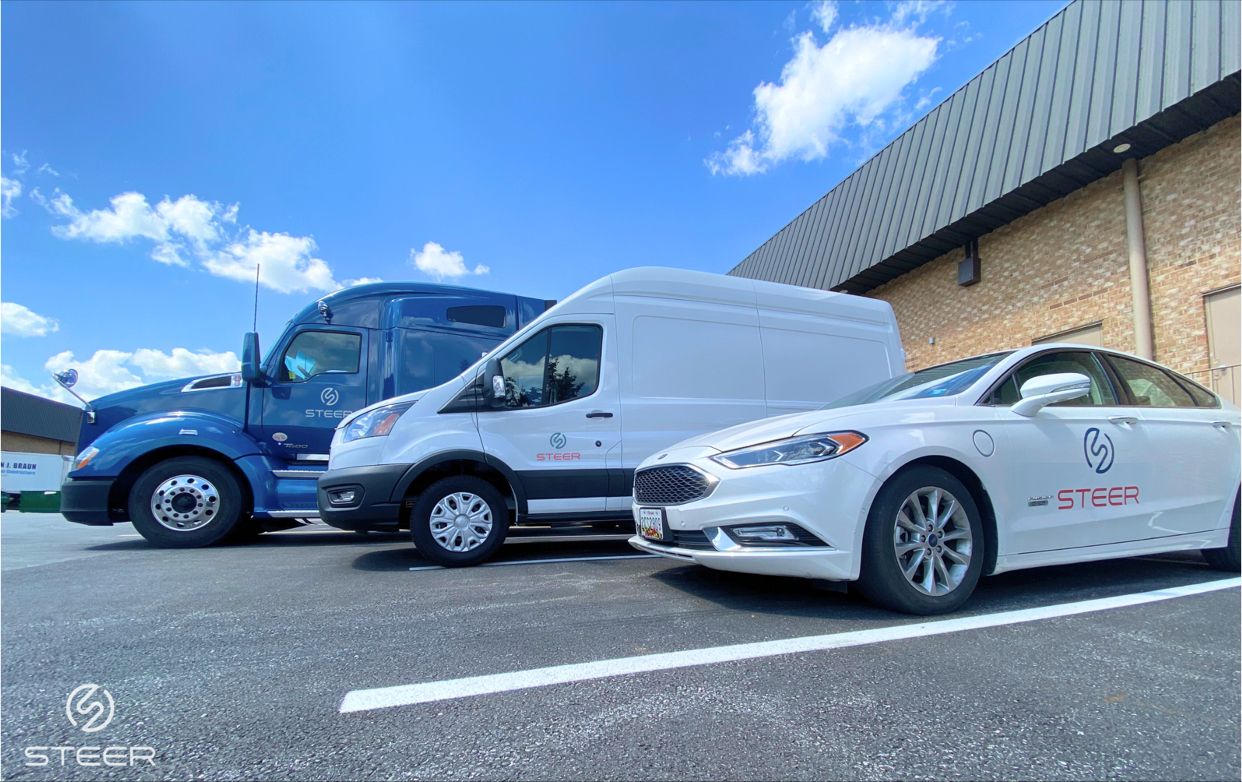
That’s the thinking that sets STEER apart, and it’s one shaped by Maryland’s real-world innovation environment. While some tech titans believe progress means scrapping what you’ve built and starting over from square one with new fleets, new vehicles, new facilities; STEER is setting a smart course for your smart future by upgrading existing fleets, vehicles, facilities and even the teams that operate them.
“I always wanted to work where I could build something ahead of its time, but practical in nature,” said Anuja Sonalker, CEO and founder of STEER.
From Legacy to Leverage
Howard County-based STEER builds autonomy on top of existing systems, transforming today’s vehicles and facilities to make them smarter, more capable, and more cost-effective over the long haul. You may have heard the saying, “Slow is smooth, and smooth is fast.” That’s the principle behind STEER’s approach. “We are focused on the depot side while others are focused on the long haul,” said Sonalker. In these environments, even small inefficiencies compound quickly.
Through its partnership with KINEXON, STEER utilizes precise indoor positioning technology that works reliably where GPS falls short. Equipped with sensor fusion and fleet management software, vehicles know exactly where they are and how to move safely through shared spaces in an increasingly automated environment. By focusing on autonomy in low-speed, controlled environments, STEER rounds the rough edges. The production floors of logistic hubs run smoother, and each step is safer and more efficient. Together, those gains add up to measurable value that amplifies your investment.
Parking Today’s Tech In Your Garage
STEER’s vision goes beyond industrial and fleet settings, with plans to bring autonomy directly to the consumer. STEER developed systems that retrofit existing cars with autonomous parking capabilities, allowing a vehicle to find and enter a parking space after the driver steps out. Because many vehicles built since 2012 already support electronic steering, braking, and throttle control, STEER’s approach makes advanced autonomy accessible without requiring the purchase of a brand-new car.
For Sonalker, this kind of autonomy is about more than just the technology. “If we change the face of mobility the way I think we can,” she said, “it will impact every single person, even if only during the last 15 minutes of their journey. We want to change the culture.”
By focusing on practical, low-speed autonomy that improves common experiences like parking, STEER underscores its belief that meaningful innovation happens in the moments people encounter every day.
Where Technology Evolves
Innovation is often framed as a clean break from the past. STEER sees it differently.
Whether in a depot, a fleet yard, or your driveway, the same idea holds true: start with what you’ve got, and build on that legacy. Progress doesn’t mean abandoning systems that work. It means understanding them well enough to make them smarter, safer, and more productive in ways that last.
That philosophy aligns closely with Maryland’s innovation environment, where new technologies are expected to prove themselves in the real world, not just in theory. From applied research to operational testing, Maryland offers the kind of ecosystem and testing environments where autonomy can be evaluated alongside existing infrastructure. STEER reflects the best of that approach by taking what already works, adding what makes sense, and producing something built to last. Your legacy.