From the Ocean City boardwalk to the Statue of Liberty, the family-owned Paul Jones Lumber has provided materials for some of the most popular destinations along the East Coast.
As the oldest lumber company in the state, Paul Jones Lumber is known for its quality wood products made from the Eastern Shore’s loblolly pine trees. The region offers a shorter growing season that produces stronger, denser pine trees—and according to the Worcester County company, that’s exactly what customers are looking for.
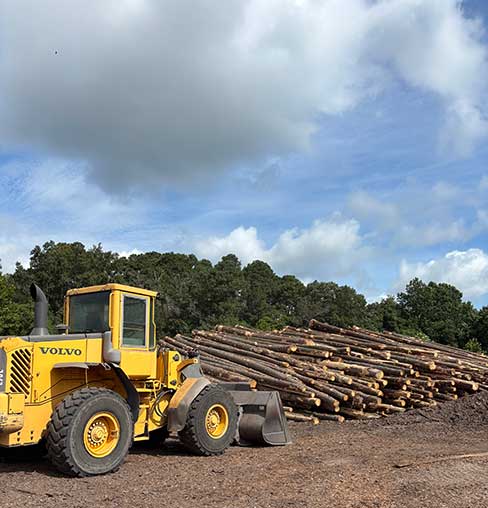
Founded in 1918, the company got its start by cutting railroad ties (the supports for rails on a track), and quickly began providing heavy timber for infrastructure and construction projects. Back then, manual labor was the norm at Paul Jones Lumber and heavy machinery was years away; employees worked hand-in-hand with mules in the forest.
“They used mules to move timber around,” said Hunter Pusey, operations manager and fifth-generation worker at the company. “At the end of the day, the workers knew when it hit 4PM because the mules would stop working and put themselves back in the barn.”
As the Snow Hill business grew, it expanded its range of services beyond its neighboring communities; soon the company was serving states throughout the Northeast, then out West, and eventually overseas with its specialty sized timbers. The Paul Jones Lumber team often cuts heavy timbers up to 30 feet long and other uncommon dimensions for foundation pilings, energy infrastructure projects, and more.
“The 1939 New York World’s Fair was one of the biggest projects that got this company started,” said Hunter, who explained that Paul Jones Lumber supplied the piling and timbers that went into the Fair’s construction. Plans for the Fair were announced in 1935, and Paul Jones Lumber began shipping materials to New York the following year.
The company has also supplied wood to contractors that restored the Statue of Liberty—trees from Maryland’s Eastern Shore were used as a support system for one of the most recognizable figures in the world.
Back home, locals may be surprised to learn that they’ve encountered Paul Jones Lumber products without even knowing.
“We’ve supplied the materials for the Ocean City boardwalk at least three times,” said Hunter, noting that they helped after Hurricane Gloria of 1985 wiped out the boardwalk, and when the town rebuilt certain boardwalk sections nearly a decade ago. “We cut all the structural timber underneath the deck boards. It had to be strong enough to support emergency vehicles driving down the boardwalk.”

In neighboring Virginia, the company has provided pine and hardwood for the Chesapeake Bay Bridge Tunnel and the Hampton Roads Bridge-Tunnel near Willoughby Spit. During construction, bridges often have temporary wooden bridge mats that allow work vehicles to pass, and temporary wooden bridges are sometimes built adjacent to the permanent structure, Hunter explains.
With its experience in heavy timbers and construction, Paul Jones Lumber hopes l to get involved with rebuilding the Francis Scott Key Bridge in Baltimore. With few sawmills left in Maryland, Hunter believes the company’s specialization in heavy timbers (both pine and hardwood) can benefit the local construction project.
“The wood that we’re cutting… you can’t buy at Lowe’s or Home Depot,” said Hunter.
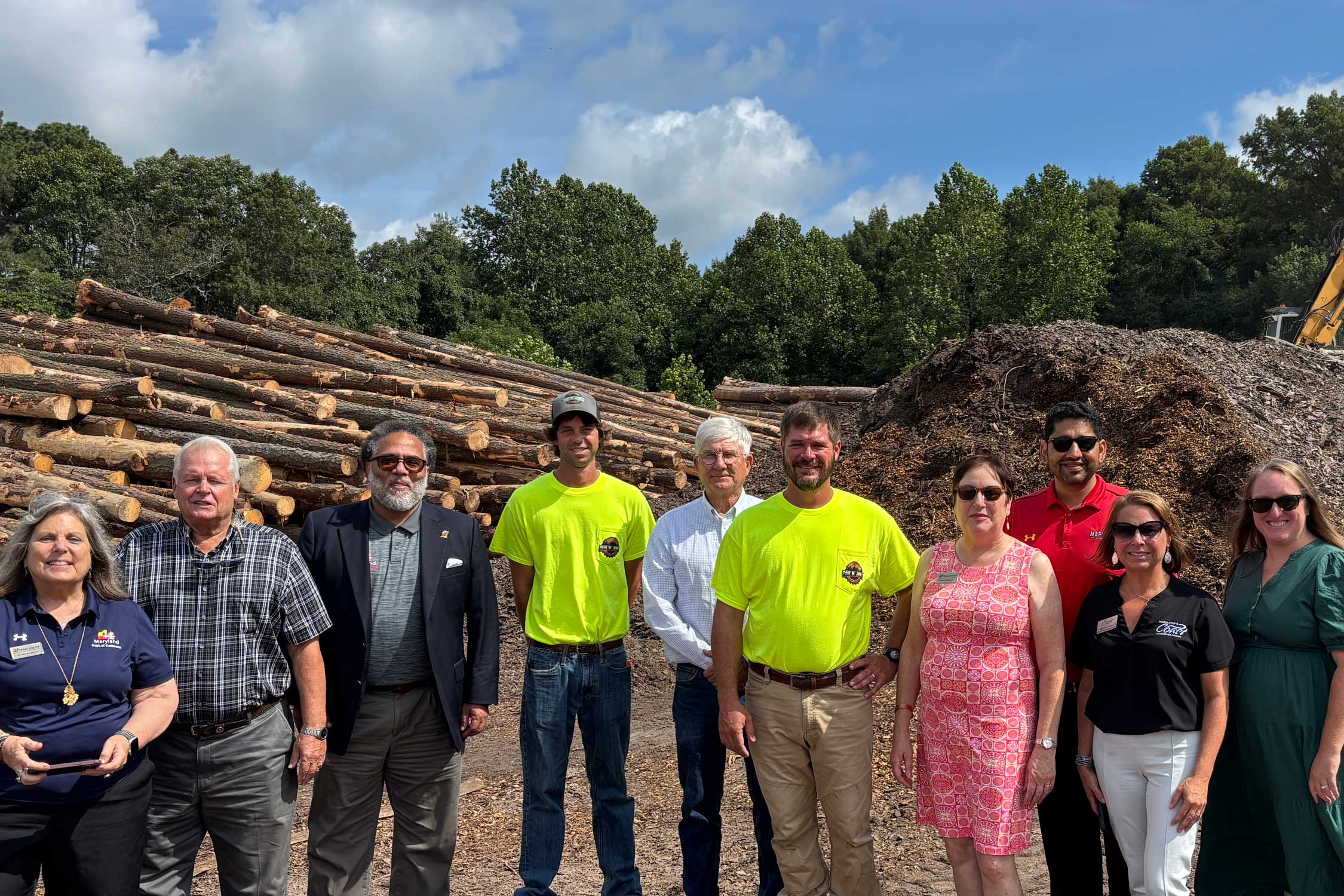
With nearly 50 workers in Snow Hill, the company is dedicated to managing Maryland’s forest resources for years to come and stresses the importance of resource conservation. Every part of the tree must be used – bark is turned into mulch and potting soil; wood chips from scrap wood are used to produce paper; and sawdust and wood shavings are used for animal bedding.
“It’s important for our business to stay at a size where we can manage our natural resources. There’s a finite amount of land, but being located in the Eastern Shore environment is why our company is still in business,” said Hunter. “There’s an ebb and flow with demand, so we are diligent about what we are doing and when.”
Additionally, the timber purchased by Paul Jones Lumber must be at least 50 years old, or else its size and grade won’t match the specifications needed for heavy infrastructure projects.
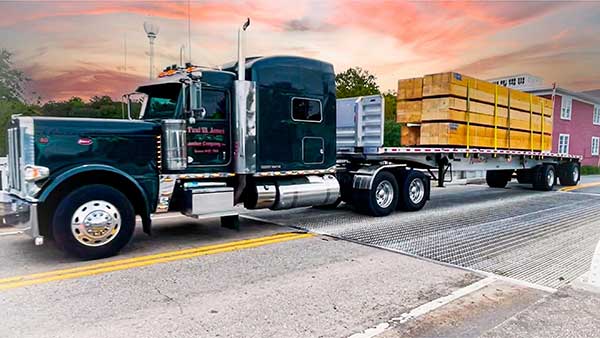
“Wood is a natural and renewable resource. The landowner that grows timber is not doing it for themselves, but for the next generation,” said Hunter. “That is the dynamic of our family-owned business. Just like that landowner, as a family-owned sawmill, we make decisions and manage this company so the next generation can continue our legacy.”
In order to maintain efficiency, the company is finding ways to optimize its equipment to make the best cuts. Hunter says that a lot has changed with technology and equipment over the years, and that the company has researched the Maryland Manufacturing 4.0 Grant Program to continue automating its processes.
“Programs like the state’s Manufacturing 4.0 grant help reinforce manufacturing in Maryland and are a great resource for small businesses,” he said. “Back in the day, we took care of our employees and animals…and today we’re also taking care of our equipment. That’s why we’re able to sustain and do what we do best.”