In the Frederick County manufacturing suites of Kite, a Gilead Company, cell therapy specialists are manufacturing cancer treatments so advanced they actually involve the use of each individual patient’s own cells.
Now, with a little help from Maryland’s Partnership for Workforce Quality Program (PWQ), the California-based company is not only expanding its own workforce, but also elevating the capabilities of biotech talent in the region.
“We have a Kite-specific manufacturing process, and much of it includes skills that are transferable across the life sciences industry, and consistent with good manufacturing practices (GMP),” said Kelly Stevens, Kite’s associate director of operational excellence.
Because cell therapy is a burgeoning area across the biotech industry, Kite employees typically are learning a valuable skillset that builds on their previous experience and knowledge. Kite is sharing this cell therapy expertise with local interests too, through partnerships with Frederick Community College, Hood College and Frederick County Public Schools, said Public Affairs Director Joseph Roth.
Kite’s cell therapy specialists work with urgency to return patient cells without delay, while ensuring every step is executed carefully and reliably for those in critical need. Hospitals send them T-cells from patients who are ill; the specialists then re-engineer those cells to manufacture the individualized treatment, which is promptly shipped back to the hospitals to be infused back into the patients.
Each treatment is unique, Stevens said. “Our specialists have patients’ cells in their hands. It’s not an assembly line or a mass-produced bulk item made to stock.”
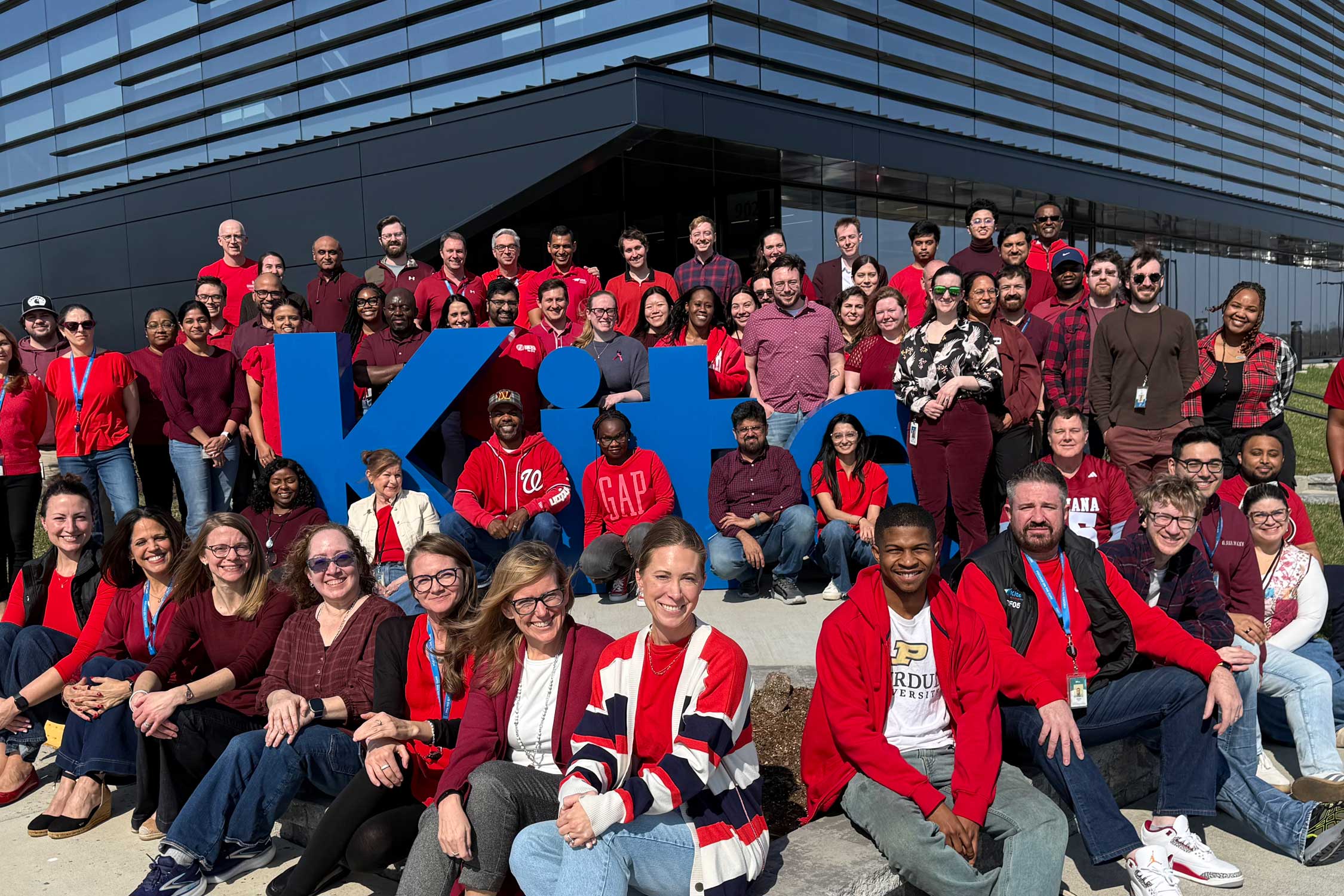
In recent months, Kite has hired 50 new cell therapy specialists, bringing its total in Frederick County to well over 500 employees. To help cover the cost associated with this growth, Kite was approved for a training grant through the PWQ program administered by the Maryland Department of Commerce. This program provides matching training grants and support services to small and mid-sized manufacturing and technology companies so they can increase the skills of existing workers for new technologies and production processes, improve employee productivity, and increase employment stability.
Throughout a training process, which can last up to six months, cell therapy specialists are rigorously trained on standard operating procedures, complete structured on-the-job training alongside qualified specialists, and perform hands-on practice in a dedicated training suite using non-patient cells.
By the time they begin working on the cells of actual patients, they have mastered the routines which comprise the whole process, said Roth.
While Kite currently produces a cell therapy product to treat lymphoma, the company is preparing to produce a new treatment, one for multiple myeloma. The two cancers tend to affect different patient populations and the cell therapy treatments will require two different processes, and Kite plans to cross-train its specialists on the two different manufacturing platforms, Roth said.
In parallel to extensive cross-training and career development opportunities, Kite is expanding clean rooms and continues to incorporate automation at its LEED-certified building in Frederick – which was a finalist for a Facility of the Year award from the International Society of Pharmaceutical Executives.
“We’re both investing in employees and the equipment we use to produce our therapies,” Stevens said. “All sides of the company are advancing and growing together.”