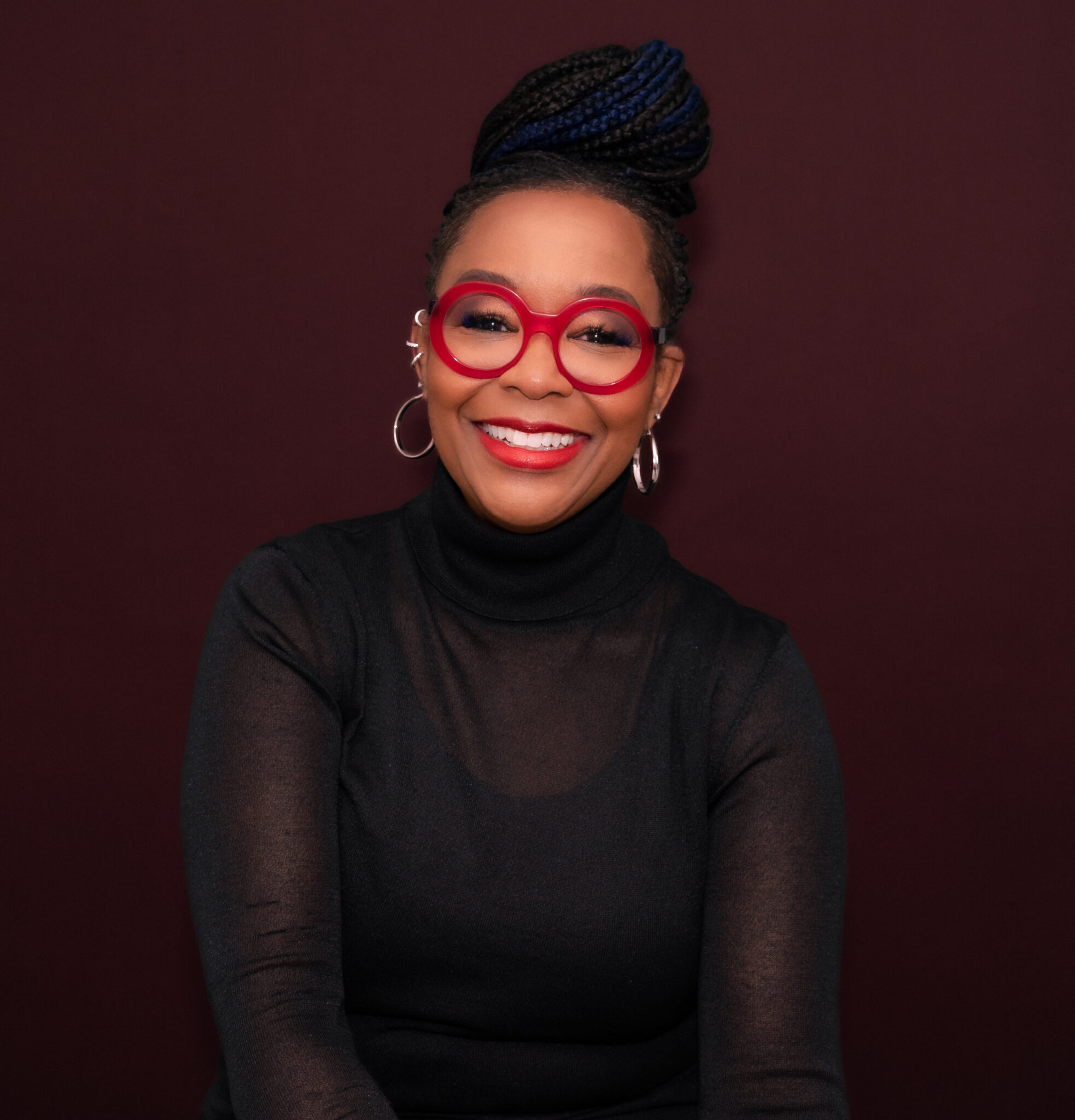
Meet Janeen Uzzell, CEO of the National Society of Black Engineers (NSBE). Janeen is leading the organization as it prepares for its Annual Convention in Baltimore on March 18-22, 2026. As a champion of equity, innovation and workforce development across STEM, she also serves on the Maryland Aerospace and Technology Commission. Her leadership reflects a commitment to expanding access and opportunity while building strategic partnerships that advance engineering excellence and economic growth nationwide.
What are the driving factors to becoming a mechanical engineer?
One of the things I love most about NSBE is the recognition of how important the people in your life are to our professional journeys, whether that’s community, peers or mentors, and that’s where my journey begins as well. Around 7th grade, it became clear I needed help in math. I was excelling in most courses, but math required extra support—and that doesn’t mean I couldn’t excel. My parents understood this distinction and they got me a tutor who tutored me through high school and taught me my first line of code, taking me to Saturday classes at Rutgers University where I wrote my first if-then statement.
The driving factor for me becoming a mechanical engineer was my cousin, Lysander. When I was deciding my major, he said, “You’re getting the math and science. You’re smart. You should study engineering. You’ll always have a job. There aren’t enough women doing this work, and I know you can do it.” He told me I’d study mechanical engineering. And that was it. I was accepted into the College of Engineering, studied mechanical, and haven’t looked back since.
Can you talk about your experience as a woman in STEM?
It hasn’t always been an easy journey. It’s been full of people reminding me that I might be reaching too high, shooting for stars I couldn’t capture.
I attended an all-white, all-girls Catholic school, and while I’m grateful for the education, no one ever encouraged me toward engineering. I didn’t have teachers or counselors telling me I could be an engineer until I reached North Carolina Agricultural and Technical State University. Being surrounded by Black faculty and classmates who believed in me changed everything. We used to say, “We start together, and we finish together,” and we still say that to this day.
I want people to know that one bad grade doesn’t define your future. I was a B-C math student, but I did more work than the average person to understand my classes. That journey brought me to where I am today. I only hope that people reading this will know, if you see someone who doesn’t seem to be the rising star, it does not mean they don’t shine bright. Don’t dim their light.
One of Maryland’s greatest assets for businesses is the diversity in our workforce. How does that impact a business?
To ask about the impact of a diverse workforce on business is to ask about the impact of a diverse society on the world. And we should know that a community made up of diverse others is a stronger community. I’m talking about different zip codes, food choices, lifestyles, income levels. Everything moves forward in a space that is equitable when the people weighing in bring uniquely different sets of skills.
The world’s most impactful problems must be solved by uncommon people—people who come from all over and reflect the world as it is: in gender, faith, lifestyle and financial status. This is how the world moves forward, and this is how the workforce needs to be. But diversity alone isn’t enough—you have to truly trust and empower that talent. Don’t hire diverse teams and then limit their voice or influence.
A diverse workforce means we’re all working together to build, solve and lead. Being part of what it means to build a diverse workforce is what NSBE does. It’s why we exist. We are tens of thousands of individuals from around the world who are talented professionals, and we need to be embraced as experts. When that happens, the world is going to be a better place.
Last year, you were appointed to the Maryland Aerospace and Technology Commission (MATC) board by Governor Moore. Can you talk about the mission of the board and the insight you are bringing to it?
The Maryland Aerospace and Technology Commission was created to promote innovation in space exploration and commercial aerospace opportunities, including integrating space, aeronautics and aviation industries into Maryland’s economy. Initially, the MATC is developing a strategic plan to create designated aerospace and technology zones in the state.
I’ve thoroughly enjoyed my role as a commissioner on the MATC, and it’s an honor to serve Governor Moore and the State of Maryland. The insight I bring to the board is as a lever for the technology arm of the Commission. Maryland is already highly regarded as an aerospace industry state. The volume of aeronautical programming, education, business models and being home to NASA Goddard Space Flight Center make Maryland and aerospace nearly synonymous.
The Commission is also dedicated to ensuring the world knows Maryland is a place where technology thrives on all levels, whether entrepreneurial, small business or larger corporations. I see my role as being a voice for what it means to bring technology into this space, shining a light on the impact of technology and how technology works within the community. It’s so different from traditional government-based business, which is what aerospace has been. As the voice for technology, I’m helping bring other commissioners on board to how Maryland can be a place where people want to build, live, design and bring new ideas and co-creation for technology to advance not only the state but the world.
What’s the vision for the NSBE organization and the Annual Convention specifically?
NSBE’s mission is to increase the number of culturally responsible Black engineers who excel academically, succeed professionally and positively impact the community. That mission has guided us for over 50 years, and it continues to drive everything we do.
While we are proudly rooted as a Black organization, NSBE is a place where anyone who chooses to be part of our mission can thrive. Our vision for NSBE is to be the world’s leading organization developing engineering talent and ensuring that talent is recognized, empowered and positioned to lead.
For the Annual Convention specifically, our vision is to create the premier gathering where engineers connect with opportunity, community and purpose. Baltimore 2026 will bring together nearly 18,000 students, professionals, educators and corporate partners for five days of career development, technical excellence and cultural celebration. This isn’t just a conference. It’s where careers are launched, partnerships are forged and the next generation of engineering leaders finds their footing.
We want attendees to leave Baltimore inspired, equipped and connected—with job offers in hand, with mentors they’ll keep for life, with a renewed sense of what’s possible when we come together. And we want Maryland to see what happens when you invest in excellence in STEM.
What would you like the attendees for this year’s NSBE Annual Convention to know about the engineering opportunities available in Maryland?
Maryland is one of the most dynamic states in the country for engineering talent, and I want our convention attendees to recognize the breadth and depth of opportunity here. Maryland isn’t just aerospace; though being home to NASA Goddard, Patuxent River Naval Air Station, and major aerospace contractors certainly establishes us as a leader in that space. But Maryland is also cybersecurity, biotechnology, advanced manufacturing, transportation infrastructure and emerging technology.
We have a density of federal agencies, research institutions and innovative companies that creates an ecosystem where engineers can work on problems that matter. National security, space exploration, public health and climate resilience are prime examples, and we have an administration under Governor Moore that understands the importance of investing in diverse talent and creating pathways for engineers to thrive.
I want NSBE attendees to know that Maryland wants you here. We want you building your careers here, starting companies here, raising families here. The state is committed to being a place where you can do world-class work while living in communities that reflect who you are. There are opportunities for engineers at every stage of their career, from new graduates to seasoned professionals looking to lead.
What’s one of the most important things to consider when starting a new job?
One of the most important things to consider when starting a new job is understanding how you’ll be supported in your growth. Not just your technical growth, but your whole self: professionally, personally, culturally.
When you start a new job, you’re not just accepting a title and a salary. You’re entering a culture. Pay attention to whether that culture invites your voice or tolerates it. Those signals will tell you whether you’re walking into a place that will invest in you or extract from you.
Also, be clear about expectations, advocate for yourself early and build relationships that support your growth. Find your people. Those connections will sustain you and amplify your impact.
What’s the best advice someone gave you about your career?
The best advice I received came from my cousin, Lysander: “You’ll always have a job.” And what he meant was when you develop valuable skills, you create value that sustains you.
But over time, I’ve come to understand that advice more deeply. It’s not just about job security, it’s about agency. When you’re excellent at what you do, you create options for yourself. You’re not at the mercy of one company, one industry, one path. You can pivot, you can lead, you can build something new.
The other piece of career advice that shaped me didn’t come as words, it came as an example. Watching Black professionals, particularly at General Electric (GE), I learned that excellence is non-negotiable, but it’s not enough. You also have to be strategic about relationships, about visibility, about positioning yourself for opportunity. You have to be your own advocate while also lifting others as you climb.
And perhaps the most important lesson I’ve learned is this: your career is not just about what you achieve. It’s about what you make possible for others. Every door I walk through, I’m thinking about who I can bring with me, who I can mentor, what systems I can change so the next generation doesn’t face the same barriers. Build yourself up, but never forget to reach back.