When Artemis II blasts off on its 685,000-mile mission to return humanity to the moon for the first time in more than half a century, a Marylander will be at the helm, backed by technology, talent, and mission control rooted here.
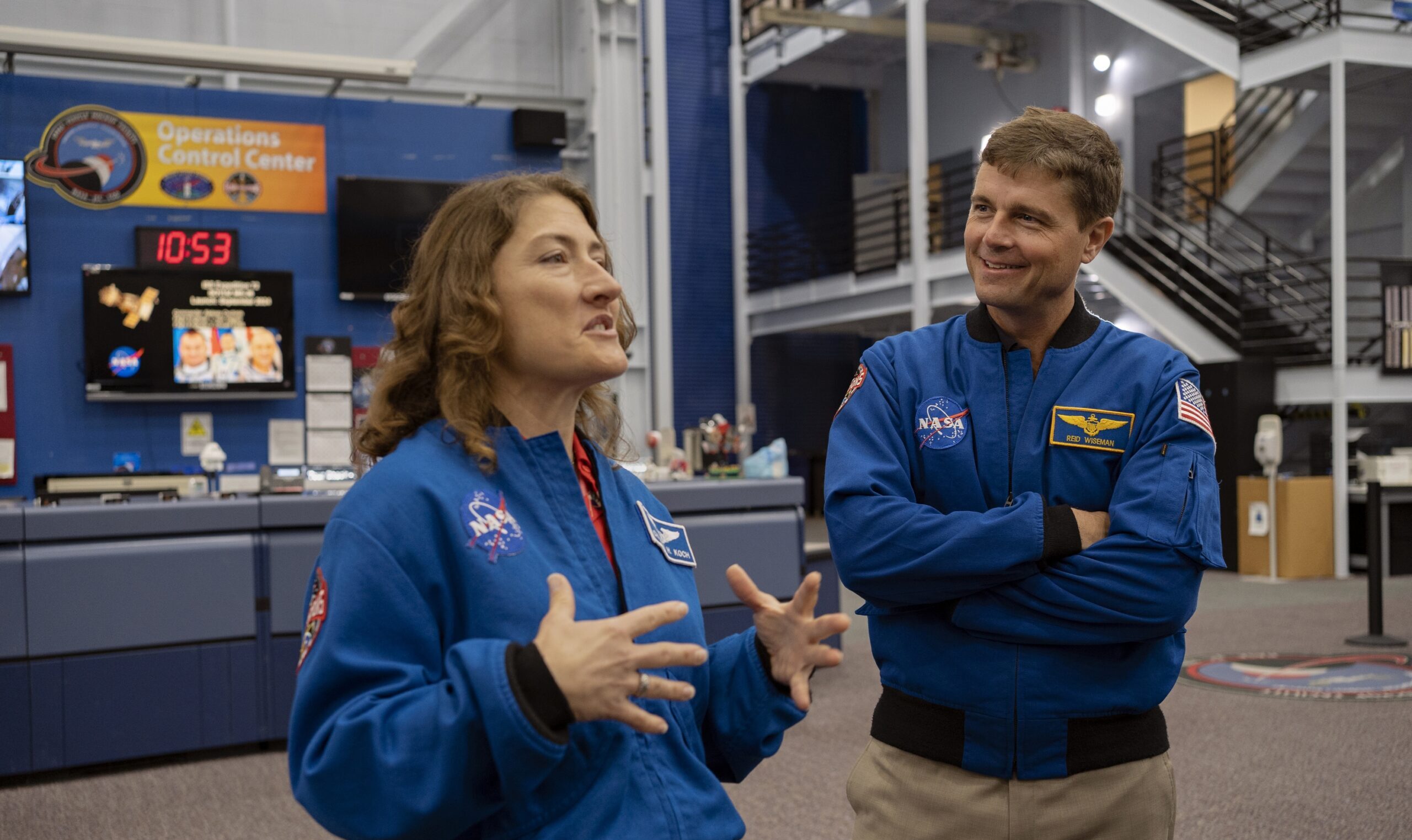
Artemis II Commander Reid Wiseman is a Baltimore County native who graduated from Dulaney High School with the right stuff and the firm educational grounding that would propel him to the stars. On each leg of Wiseman’s journey to success in one of the most demanding fields on or off the planet, Maryland launched him to the next level.
Wiseman got his start pushing the envelope at the elite U.S. Naval Test Pilot School at Naval Air Station Patuxent River in Southern Maryland, then returned to Baltimore to earn his masters degree in systems engineering at Johns Hopkins University. “I love getting to represent Maryland,” said Wiseman, noting that NASA’s Hubble and James Webb space telescopes are both run from Baltimore’s Space Telescope Science Institute. “We have quite a few astronauts from Maryland, and many of them are good friends of mine.”
Maryland’s Pipeline to Tomorrow
Considering Maryland’s leading STEM education system, #1 professional and technical workforce, and the highest concentration of aerospace engineers in the nation, it’s no surprise Maryland is embedded in every stage of the trek from the Earth to the moon. Astronaut Christina Koch is set to become the first woman to leave Earth’s orbit and make the trip to our nearest neighbor. She’s another product of Maryland’s tech-talent pipeline and credits her time and training here as inspiration and impetus for her journey to the moon.
Koch trained at Greenbelt’s Goddard Space Flight Center and served as an electrical engineer at the Maryland-based Laboratory for High Energy Astrophysics. Koch credits her time at Goddard for inspiring her to explore the universe, saying, “Earth science, space science, astrophysics, geology, everything cool about the universe feels like it was happening at Goddard,” adding, “It was my dream job.”
Koch continued to support NASA’s mission of exploration through cutting-edge work with Johns Hopkins University’s famed Applied Physics Laboratory. Koch even provided a leg up to the next generation of potential Maryland trained astronauts by teaching physics at Montgomery College, part of Maryland’s top-ranked community college system.
America’s Mission, Maryland’s Systems
While Maryland’s top talent pool will be on board Artemis II’s mission to the moon, another Maryland connection will be keeping them, well, connected. When the astronauts phone home, it will be through NASA’s Near Space Network at Goddard and run by its Maryland-based crew. Experts here will enable communications, tracking and telemetry for the mission and serve as Artemis II’s essential command uplink hub, providing critical instructions to the spacecraft.
But Marylanders on the mission and keeping the crew connected to Earth aren’t the state’s only contributions to this epic voyage. Bethesda’s Lockheed Martin and its Maryland-based engineering teams were the prime contractor for Artemis II’s Orion Crew Module and assembled some of the craft’s advanced rocket motors in their Elkton facility. Northrop Grumman leaned into Maryland’s advanced manufacturing leadership, building and testing parts at its Maryland Space Assembly and Test (MSAT) facility. These tech titans are just two of more than 100 Maryland-based companies that contributed essential components for the Artemis II mission.
For astronauts Wiseman and Koch, Artemis II may be just another day at work. For humanity, it’s our next giant leap. From crew to systems to support and beyond, it’s a mission made possible in Maryland.